Can You Power Wash Your Car?

A pressure washer is an efficient way to clean your car’s exterior. The water stream cuts through tough buildup on body panels and blasts mud from tire treads. Professional detailers often rely on these tools to remove heavy dirt before physical scrubbing.
When washing a car with a pressure washer, proper technique matters. A careful approach cleans your vehicle while protecting its finish and mechanical parts. Learn safety tips and instructions on how to power wash a car in the safest, most effective way.
Is It Safe to Pressure Wash a Car?
Power washing a car is safe if you use the correct pressure and technique. Using this tool for DIY home car washing service does come with some risks, mainly damaging the paintwork. Excessive pressure or holding the nozzle too close can strip coatings, chip paint or create swirl marks. Water could infiltrate electrical components or the engine bay, causing issues. Be sure to clean gently to avoid these mistakes.
Safety Tips Before Pressure Washing Your Car
Successfully washing a car with a pressure washer involves conscious equipment choices and careful techniques. Follow these guidelines to protect your vehicle while achieving thorough cleaning results:
- Avoid strong pressure: Power washers measure the pressure delivered by the nozzle in pounds per square inch (PSI). Maintain a PSI under 1,500 for car body surfaces to prevent paint damage and protect delicate components. Higher force works for tires, but risks harming painted surfaces.
- Use an angled nozzle: Pressure washers feature color-coded nozzles with spray angles measured in degrees. Lower degrees create narrower spray patterns that concentrate force. Choose wider-angled nozzles over narrow ones for safety. The white 40-degree nozzle spreads water in a wider fan pattern, making it safer for your car’s chassis. You can switch to a 25-degree nozzle for tires where you need more concentrated cleaning power.
- Keep your distance: Position the nozzle at least 18 inches from the surface of the car to avoid damage. For stubborn dirt that resists removal at this distance, use a chamois cloth instead of moving the sprayer closer. The shorter the distance, the higher the risk of paint damage.
- Mind sensitive areas: Direct force can force moisture inside obstacle sensors or light casings. Exercise caution near the hood where the pressurized water streams could get into electrical wiring seals. Take extra care with plastic sections of the body that may crack under excessive force.
- Be cautious of the surface: The surface you clean your car on is as important as how you clean it. Paved surfaces offer the best foundation for washing. Power washing your car on a gravel driveway could cause small stones to fly up and scratch the paint. Open ground creates mud that ruins your cleaning work and makes rinsing difficult.
How to Power Wash a Car Step-by-Step
Follow these steps for effective results when pressure washing your vehicle:
1. Preparation and Setup
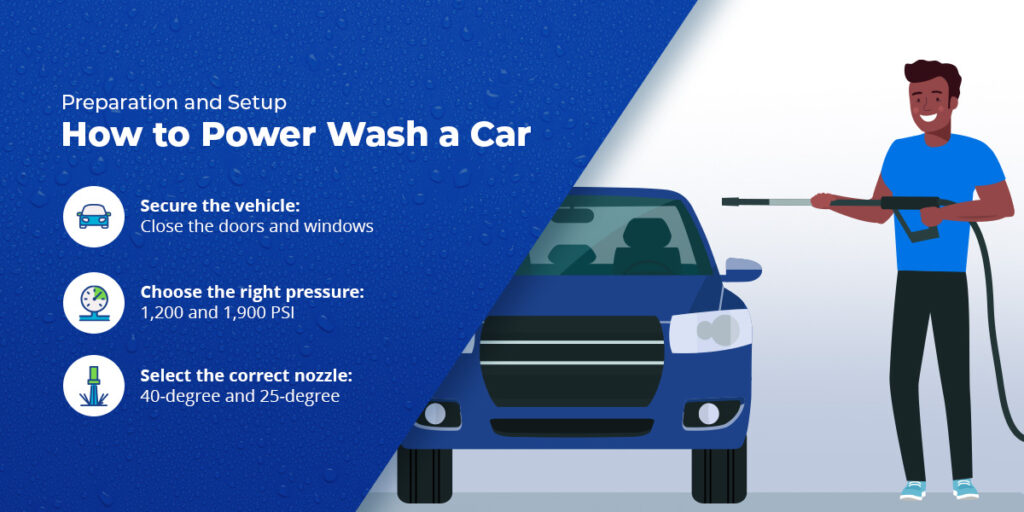
Begin by securing your workspace and configuring your equipment to match your vehicle’s needs:
- Secure the vehicle: Park your car in the shade to prevent soap from drying and spotting. Make sure the doors and windows are closed, with the engine bay covered if exposed. Fuel caps and charging ports must stay sealed.
- Choose the right pressure: Set your power washer to between 1,200 and 1,900 PSI. Cars with fresh wax, old paint or ceramic coating require the lower end of this range. Vehicles with stubborn, caked-on dirt benefit from higher settings.
- Select the correct nozzle: Keep the 40-degree and 25-degree nozzle attachments ready. Avoid 0-degree or 15-degree tips, as the concentrated stream can strip paint and force water through seals.
2. Pre-Rinse and Wheels
An initial rinse removes surface contaminants before soap application. Stand about 3-4 feet away from the vehicle, starting at the top and working down to flush away loose dirt.
Clean the tires first using the 25-degree nozzle before moving on to the main body. This approach ensures you avoid splashing mud from the wheels back onto clean paint.
3. Apply Soap
A foam cannon is the ideal attachment for applying car wash soap. This specialized cleaning tool connects to the pressure washer wand, turning the soap into a thick layer of foam. Use a pH-balanced automotive cleanser for the best results. Sweep the cannon back and forth across the vehicle to coat the paintwork. Then, let the soap sit for a few minutes to soften stubborn dirt. The dwell time allows cleansers to work without the need for excessive scrubbing.
4. Scrub the Surface
After coating the car body in soap, scrub the surface section by section using a plush microfiber wash mitt. This step lifts any lingering, leftover dirt. Work with smooth, gliding strokes, moving quickly to stop the soap from drying. Rinse the mitt in clean water to avoid reintroducing dirt to the paint.
5. Final Rinse and Dry
Switch back to clean water and reattach the 40-degree tip. Rinse from top to bottom so that the soap runs down off the vehicle using a steady, sweeping motion. Dry the car as soon as possible using soft microfiber drying towels or a leaf blower. Quick drying helps to avoid water spots for a streak-free finish.
Frequently Asked Questions
Here are answers to common car pressure washing questions to help you achieve professional results:
How often can I power wash my car?
The answer depends on how or where you drive, but every two to three weeks works well. This frequency keeps your car clean without overdoing the process or stressing protective coatings. Vehicles driven in harsh conditions may benefit from more frequent washing, while garage-kept cars need less attention.
Can an auto power wash remove car sealant or wax?
If you follow the recommended settings, pressure washing can help maintain wax or protective sealants. Remember to stick to a lower-pressure setting and a wider nozzle.
How do I prevent water spots during a pressure washer car wash?
Wash your car in a shady spot and dry it straight after cleaning with a microfiber towel. Direct sunlight causes droplets to evaporate before you can dry the surface, leaving mineral deposits.
Contact Us for Home Power Washing Services
Now that your car is clean, treat your driveway to pressure washing from Perfect Power Wash. Our professional technicians use best-in-class equipment and proven techniques. From home exteriors to decks, we power wash your surfaces with care. We guarantee to deliver the best results possible for your property using our safe and effective processes.
With our convenient scheduling, you can book a service in minutes over the phone. Call 866-294-9098 or request a power washing quote today.